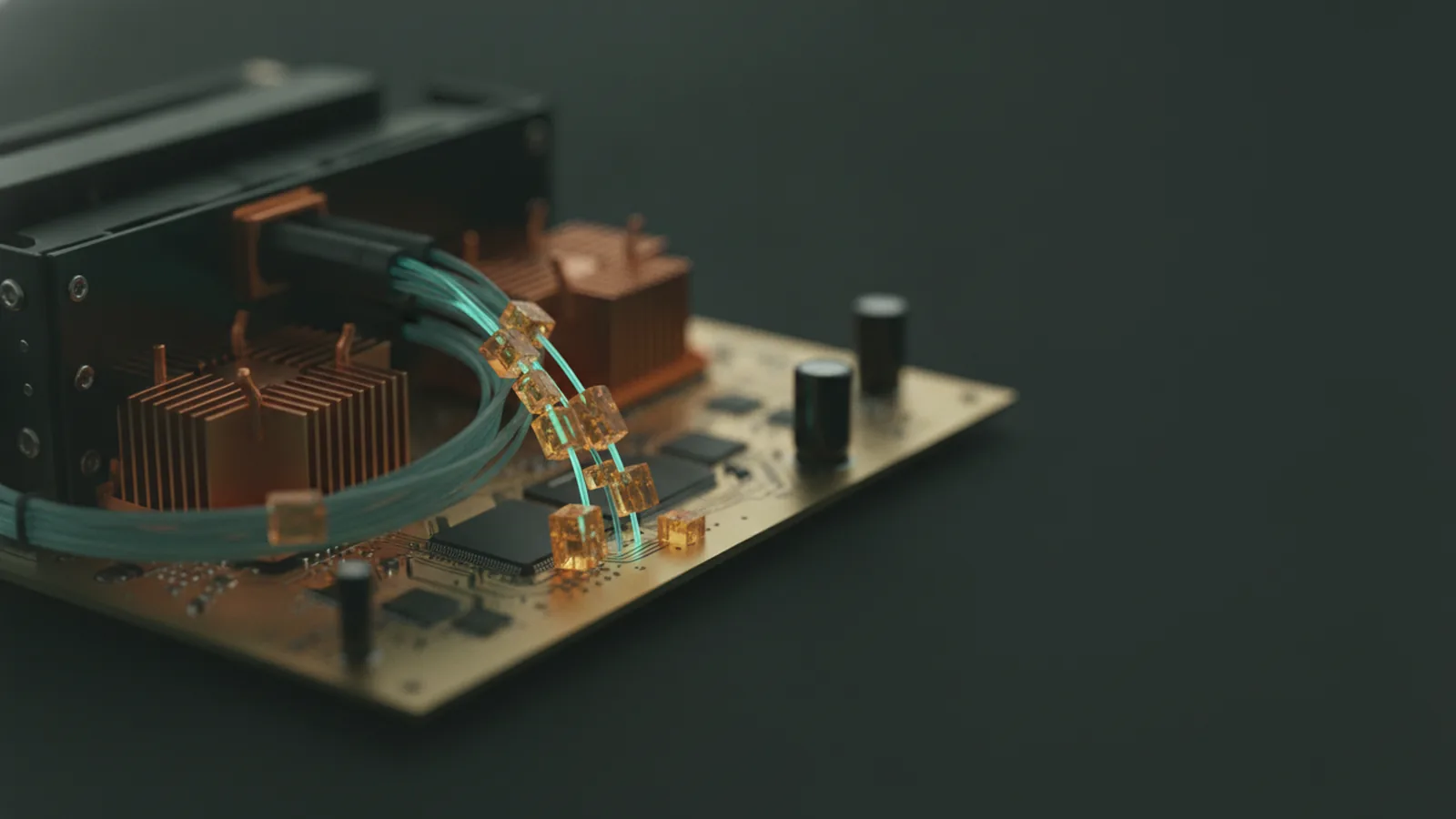
ML Research Built for Production Engineers

Technical guides, evaluation tooling, and case studies on vector databases, model lifecycle, and running LLMs at scale. Working code included.

What We Cover

Practical knowledge for engineers who maintain ML systems in real environments, not controlled demo conditions.

Evaluation Harnesses

Design and run evaluation pipelines that produce reproducible metrics. We publish harness configurations, prompt templates, and scoring code you can adapt directly to your models.

Vector Database Engineering

In-depth coverage of Pinecone, Weaviate, Qdrant, and pgvector. Indexing strategies, ANN algorithm tradeoffs, and benchmark data measured against real production workloads.

Model Lifecycle Management

From registry design to deprecation workflows. How to track model versions, manage staged rollouts, and detect quality drift before it surfaces in production metrics.

LLM Production Operations

Latency budgets, token cost accounting, caching strategies, and documented failure modes. The operational realities of running LLMs at scale that most guides skip entirely.

Transparent Benchmarks

Every benchmark result links back to the code that produced it and the hardware it ran on. Methodology is published alongside numbers so you can reproduce or challenge our conclusions.

Open-Source Tooling

Libraries and scripts released under the Apache 2.0 license. Built to solve specific production problems, documented at the level where reading the source is enough to trust it.

Reproducibility as Engineering Practice

We treat evaluation rigor the same way we treat code quality: measurable, trackable, and improvable over time.

Fully reproducible evaluation pipelines with pinned dependencies

Benchmark results traceable to specific commits and hardware configs

Working code published alongside every technical guide

GDPR-relevant data handling covered for EU-deployed ML systems

Vector index benchmarks across four major database backends

Model drift detection patterns drawn from production deployments

about

Access Plans

All plans include full access to published guides. Paid tiers add early access, private tooling builds, and direct support from our research team.

Free

Researcher

Full access to all published guides and open-source tooling.

All published technical guides

Open-source tooling repository

Community discussion access

Monthly benchmark digest

€49/mo

Engineer

Early access, private tooling builds, and priority Q&A with the research team.

Everything in Researcher

Early access to guides before publication

Private evaluation tooling builds

Priority Q&A with research team

Quarterly deployment pattern reviews

Custom

Enterprise

Team licensing, custom research engagements, and SLA-backed support.

Everything in Engineer

Team seat licensing

Custom evaluation harness design

Dedicated research consultation

SLA-backed support response times

Private benchmark runs on your data

What Engineers Say

Feedback from ML engineers and AI architects who use TestML resources in their day-to-day work.

The vector database benchmarks saved us weeks of internal testing. Numbers are traceable, methodology is documented, and the conclusions held up when we reproduced them ourselves on our own dataset.

P

Priya Nair

Senior ML Engineer, Berlin

Most ML content stops at the tutorial stage. TestML publishes the unglamorous parts: cost accounting, failure modes, rollback strategies. Exactly what I need when things go wrong at 2am.

J

James Okafor

AI Infrastructure Lead, Amsterdam

Reproducibility is something the field talks about constantly and implements rarely. TestML ships working harness code with every evaluation guide. I have forked three of their repos directly into production.

S

Sofía Méndez

Applied ML Researcher, Madrid

Tools and Platforms We Cover

P
Pinecone
W
Weaviate
W&
Weights & Biases
M
MLflow
R
Ray
H
HuggingFace
L
LangChain

Start With Guides That Ship Working Code

Browse TestML's technical library. Every guide includes a reproducible implementation and documented benchmarks you can verify yourself.

Explore the Library