Is AI a Vector File? AI Format Explained
Learn whether AI files are vector files, how vector paths work, where designers use them, and how to export AI artwork as PDF, EPS, or SVG.
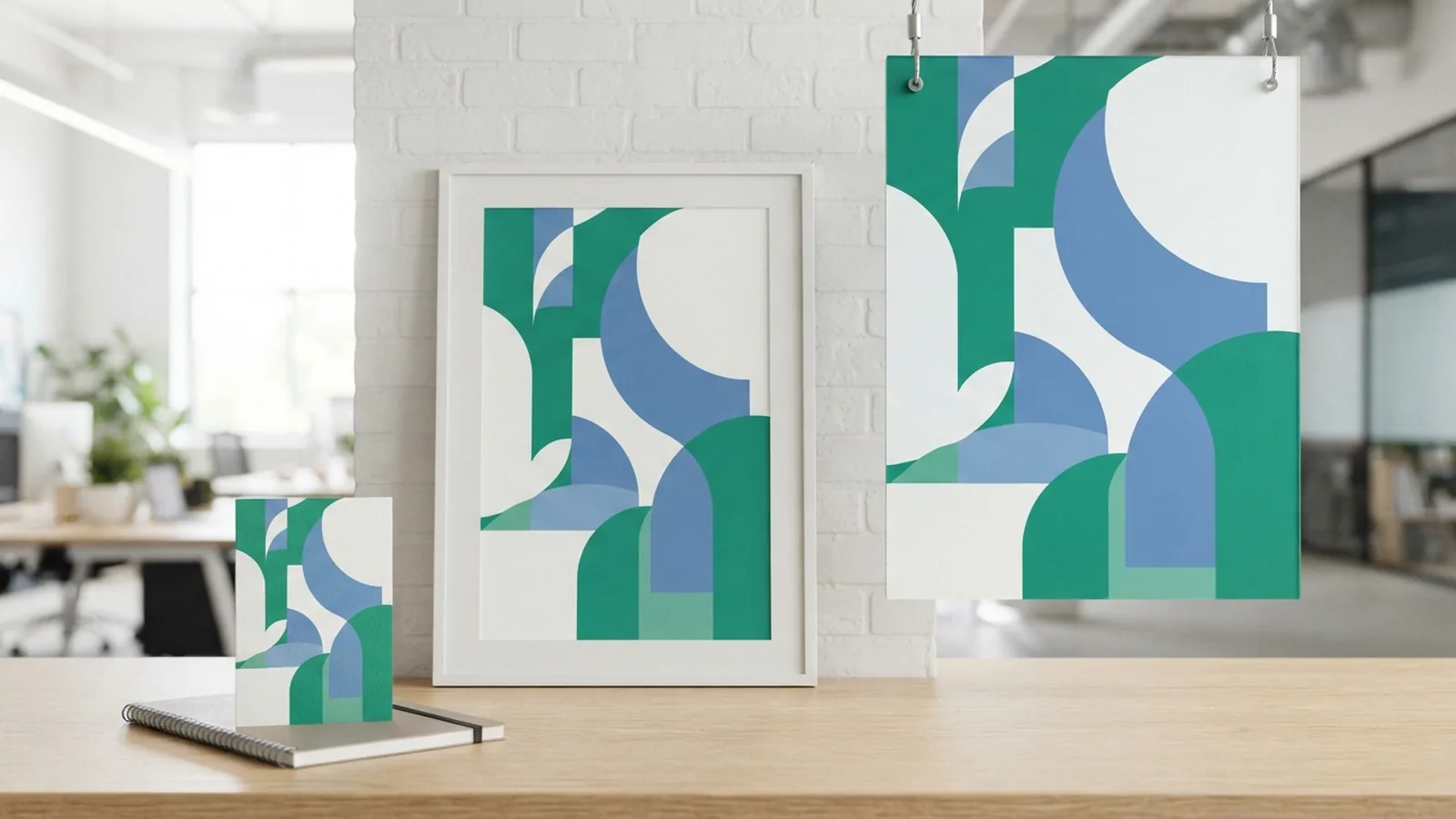
What Is an AI Vector File?
Yes, an AI file is usually a vector file. Adobe Illustrator creates AI files to store artwork built from paths, shapes, colors, and effects.
These paths rely on math rather than fixed pixels. The file records points, lines, curves, and fill rules. Illustrator then draws the artwork from those instructions.
That structure answers the question, “are AI files vector?” In most cases, yes. Still, an AI file can contain placed photos or raster effects. Those parts do not gain infinite scaling.
AI means Adobe Illustrator artwork in this context. It does not mean artificial intelligence. The two uses of “AI” describe different file and software topics.
Key Traits of AI Vector Files

Vector graphics keep their shape at any size. You can scale a small mark for a pen or a large sign. Edges stay smooth because the software redraws each path.
Raster files work in another way. They store a grid of colored pixels. Enlarging that grid can create blur or jagged edges. An AI vector file avoids that problem for its vector parts.
AI files also keep artwork editable. You can move one point, change a color, adjust a curve, or alter type. You do not need to rebuild the whole design.
Several file features affect how well an AI file travels between apps:
- Paths: These define lines, curves, and closed shapes.
- Layers: These help organize artwork and control edits.
- Color data: This can support screen colors or print colors.
- Fonts: Live type stays editable until you outline it.
- Raster content: Photos and textures keep their pixel limits.
So, “is AI vector format?” has a clear answer with one caveat. AI is a vector-based format, but every item inside the file may not be vector-based.
Why Designers Use AI Files
Scalability is the main benefit. A designer can use one source file across many sizes. This saves time when a project needs print, web, and sign artwork.
Editability matters just as much. A client may request a new color or a wider layout. An AI file lets the designer make that change without losing the original structure.
AI files also support detailed work. Designers can build complex curves, masks, patterns, and layered layouts. These tools suit both simple marks and large print pieces.
Print shops often prefer vector artwork for sharp output. Printers can use paths for cuts, screens, signs, and many press jobs. The final export still needs the right color setup and format.
Use AI as the working file, not always as the delivery file. Many clients cannot open it without design software. A shared export often creates fewer problems.
Common Uses in Graphic Design
AI files work well for artwork that needs frequent size changes. Logos, icons, and type-based designs are common examples. They also suit artwork that needs exact edits.
- Brand marks: Create clean artwork for cards, signs, and packaging.
- Typography: Shape custom type and adjust letter details.
- Illustrations: Build scenes with paths, layers, and flat colors.
- Print layouts: Prepare labels, posters, covers, and brochures.
- Cut files: Send paths to tools that cut vinyl or other sheets.
- Web assets: Export sharp icons and graphics at chosen sizes.
AI files can also hold linked or embedded images. A placed photo remains raster artwork. Its quality depends on pixel size and print resolution.
That distinction helps when someone asks, “what is an AI vector file?” It is a design container with strong vector support. It is not a promise that every object inside uses paths.
How to Convert AI Files to Other Formats

You do not need to convert an AI file to make it vector. It already stores vector artwork. You may need an export when another person or app cannot open the source file.
Choose the format based on the next task. PDF works well for review and print. EPS supports many older print and design workflows. SVG suits websites and modern screen graphics.
- Open the artwork in Adobe Illustrator.
- Check the artboard, fonts, links, and color mode.
- Save a new copy before changing export settings.
- Choose PDF, EPS, or SVG from the export or save menu.
- Review the result in the target app before sending it.
For print, ask the printer about color, bleed, and trim settings. For web use, remove hidden objects and set a useful view box. These checks prevent missing type or unwanted blank space.
The reverse task needs care. Converting PNG to an AI vector means tracing pixels into paths. Illustrator can trace simple artwork, but detailed photos need cleanup. Converting PSD to an AI vector may preserve layers in some workflows, yet it does not turn every pixel into clean paths.
Save the AI source after tracing. The traced result may contain too many points or rough curves. Manual cleanup often gives a better file.
Opening AI Files Without Illustrator
Adobe Illustrator remains the safest choice for full AI support. Other apps can open some AI files, but results depend on how the file was saved.
- Inkscape: A free tool that can import some AI and PDF artwork.
- CorelDRAW: A paid design tool with broad vector file support.
- Affinity Designer: A paid app that can open many common vector exports.
Try a PDF or SVG export when an alternative app struggles. These formats often preserve paths better across different tools. Keep the original AI file as your master copy.
Compatibility issues can affect fonts, effects, gradients, and clipping masks. Some apps may flatten layers or replace unsupported effects. Review every page before sending the file to print.
Limits to Know Before Sharing an AI File
The first limit is software dependence. Full editing usually works best in Adobe Illustrator. Free or low-cost alternatives may only read part of the file.
Some AI files also use newer Illustrator features. Older apps may show blank areas, change colors, or drop effects. A saved PDF-compatible version can improve access, but it may not solve every issue.
Embedded images add another risk. They can increase file size and still look poor when enlarged. Linked images can go missing if you send the AI file without its asset folder.
Fonts create a further problem. A recipient may not own the same typeface. You can include font files when the license allows it. You can also outline final type, but outlined text is harder to edit.
Before sharing, check these points:
- Keep an untouched master AI file.
- Package linked images and needed assets.
- Confirm fonts and licensing terms.
- Export a PDF for easy review.
- Open the export on another device.
- Ask the printer for its preferred format.
Final Answer: Is AI a Vector File?
Yes, AI is a vector-based file format created by Adobe Illustrator. It uses math-based paths to define shapes, colors, and curves.
That design gives AI files strong scalability and editability. They are especially useful for logos, type, illustrations, and print work.
Still, an AI file may include photos or other pixel-based content. Export it as PDF, EPS, or SVG when the recipient needs wider compatibility.
Use Illustrator for the best results. If that is not possible, test Inkscape, CorelDRAW, or Affinity Designer. Always review the opened file before production.
Frequently asked questions
- Is AI a vector file?
- Yes. Adobe Illustrator AI files are usually vector-based. They can also contain raster images and pixel effects.
- What is an AI vector file?
- AI is Adobe Illustrator artwork. It stores paths, shapes, colors, layers, and other design data.
- How do you convert AI to vector?
- You do not need to convert AI to vector. AI already stores vector artwork, unless the file contains only placed pixels.
- How do you convert an AI file to another format?
- Export the file as PDF, EPS, or SVG from Adobe Illustrator. Pick the format that matches the next app or print task.
- Can you open AI files without Illustrator?
- Yes, but support varies by file. Inkscape, CorelDRAW, and Affinity Designer can open many AI exports or compatible files.
- How do you convert PNG to an AI vector?
- PNG tracing can turn pixels into paths, but it needs cleanup. Simple artwork gives better results than detailed photos.
Related reading

How to Prompt AI for Better Results
Learn how to prompt AI with clear goals, useful context, and the CLEAR framework. See examples and fix common mistakes to get stronger results.

Top AI Companies, Platforms, Models, and Tools
Compare leading AI companies, platforms, models, and tools. Learn what sets OpenAI, Nvidia, Anthropic, Google, and Microsoft apart across key industries.

What Is AI SaaS? How It Works and What to Look For
Learn what AI SaaS is, how cloud-based AI tools work, where teams use them, and what to check when choosing a provider or building a product.