What Company Makes AI Chips? Key Makers Explained
Learn which companies make AI chips, how GPUs and NPUs work, who supplies AI memory, and why chip demand keeps growing across many industries.
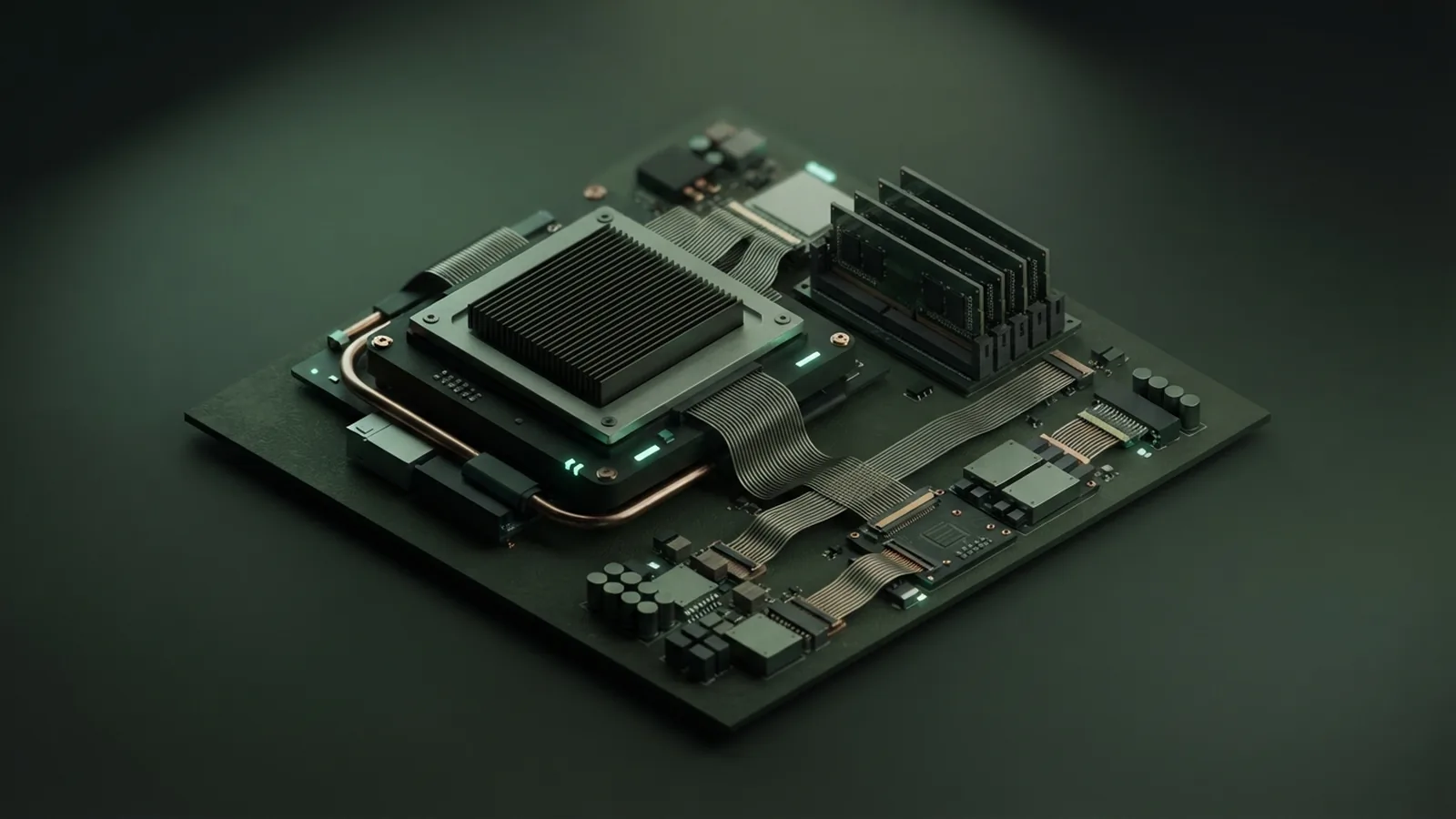
What AI chips are and who makes them
Several companies make AI chips, not one company alone. NVIDIA, AMD, Intel, and TSMC lead key parts of the market. NVIDIA, AMD, and Intel design many chips. TSMC builds chips for these firms and other customers.
AI chips are made for machine learning, pattern search, and large data sets. They handle many small tasks at once. A CPU often works best on a few complex tasks. An AI chip can run thousands of simple math tasks in parallel.
That design can cut the time and power needed for AI work. It helps train models and run them after training. Cloud firms, car makers, phone brands, and research labs all use these chips. The best choice depends on cost, speed, memory, and software support.
- NVIDIA: Builds GPUs, AI systems, and a wide software stack.
- AMD: Makes data center GPUs and server chips for AI tasks.
- Intel: Makes CPUs, AI accelerators, and edge chips.
- TSMC: Runs large chip plants for many chip design firms.
- Samsung, SK hynix, and Micron: Supply key memory for AI servers.
Why AI chips matter in modern technology
AI models need huge amounts of math. A large language model may process billions of values during training. A normal CPU can run that work, but it may take too long. AI chips split the work across many compute units.
Speed is only part of the gain. Power use also shapes the cost of an AI system. A faster chip may finish a task sooner and use less energy per result. This matters in a data center with thousands of servers.
AI chips also bring special memory paths and fast links. These paths move model data with less delay. They help systems serve chat tools, search engines, and image apps. NVIDIA describes its data center platforms as linked systems for large AI workloads in NVIDIA's HGX platform overview.
The same gains matter outside data centers. A self-driving car must read cameras and sensors in near real time. A phone may need to spot speech or faces without sending data to the cloud. Local chips can lower delay and limit network use.
Which companies make AI chips?
NVIDIA is the best-known answer to the question, “what company makes AI chips?” Its data center GPUs power model training and model use. The firm also sells high-speed links, system boards, and software tools. That full stack makes its products common in AI research and cloud services.
AMD is a major rival. Its Instinct line targets data centers and machine learning. AMD also makes server CPUs that work beside its AI GPUs. This mix helps buyers build systems with one main chip partner.
Intel takes a broader path. It makes server CPUs, Gaudi AI accelerators, and chips for edge devices. Its products target firms that want AI near the source of the data. That can mean a factory, hospital, retail store, or vehicle.
TSMC answers a different part of the query. It usually does not design the finished AI chip. Instead, it manufactures chips for design firms. Its advanced plants use small process nodes and complex packaging. The company calls this work part of its foundry service in TSMC's semiconductor technology guide.
Memory firms play a vital role too. Samsung, SK hynix, and Micron make high bandwidth memory, or HBM. HBM sits close to the compute chip and feeds it data at high speed. So, the answer to “who makes memory chips for AI?” includes these three major suppliers.
| Company | Main role | Common AI products |
|---|---|---|
| NVIDIA | Chip and system design | Data center GPUs and linked systems |
| AMD | Chip design | Instinct GPUs and server CPUs |
| Intel | Chip design and device supply | Gaudi accelerators and edge chips |
| TSMC | Chip manufacturing | Advanced process nodes and packaging |
| Samsung, SK hynix, Micron | Memory supply | HBM and other server memory |

Four main types of AI chips
There is no single AI chip architecture for every job. Each type trades flexibility, speed, cost, and power use. Buyers often combine several types in one system. The right mix depends on the model and where it runs.
Graphics processing units
Graphics processing units, or GPUs, began as graphics tools. Their many small cores also suit machine learning math. They are flexible and work with many model types. GPUs remain the main choice for large model training.
Application-specific integrated circuits
Application-specific integrated circuits, or ASICs, are built for one narrow task. They can deliver high speed with low power use. Their fixed design can limit later changes. Cloud firms may build ASICs for model serving or network work.
Field programmable gate arrays
Field programmable gate arrays, or FPGAs, can be set up after manufacture. They offer more flexibility than ASICs. They can also respond faster than a CPU for some tasks. Firms use them in telecom tools, factories, and custom data paths.
Neural processing units
Neural processing units, or NPUs, focus on common neural network tasks. Phone and laptop makers place them beside CPUs and GPUs. NPUs can run speech, camera, and text tools with low power use. They help keep small AI tasks on the device.
- Choose a GPU for broad model work and fast testing.
- Choose an ASIC for a stable task at large scale.
- Choose an FPGA when the task may change often.
- Choose an NPU for low-power AI on phones and laptops.
Trends shaping AI chip development
Large language models drive much of the current demand. These models need vast compute power during training. They also need fast responses when users ask questions. That demand pushes firms toward larger chips and bigger memory pools.
HBM is now a key part of that race. A compute chip cannot work fast if data arrives too slowly. Chip firms are also using advanced packaging to place compute and memory closer together. This approach can boost speed without relying only on smaller transistors.
More AI work is moving to the edge. Smart cameras, cars, robots, and factory tools need quick local results. These devices often face strict limits on heat and battery use. Small NPUs and custom ASICs can meet those limits.
Chip makers also seek better software support. A fast chip is hard to use if developers must rewrite every model. Tools that support common AI frameworks can win buyers. Open standards and shared tools may also reduce lock-in over time.

How AI chips support self-driving cars
Self-driving systems use chips from several firms. The car maker may design the full system. A chip firm may supply the main compute board. Other firms may supply camera chips, radar parts, or memory.
NVIDIA makes platforms for assisted driving and automated driving. Qualcomm, Mobileye, and Tesla also make or design chips for vehicle AI. Their systems process camera views, radar data, maps, and motion plans. Safety needs make this work harder than a normal cloud task.
A vehicle chip must respond within a tight time limit. It must also work across heat, cold, vibration, and power swings. Many cars use more than one compute path. A backup path can help keep key safety features active during a fault.
This market shows why “what company makes the AI for self-driving cars?” has no single answer. The answer depends on the car brand and its system design. Most vehicles use a mix of chip suppliers and in-house software.

Why making AI chips is so hard
AI chip manufacturing needs huge sums of money and deep skill. A modern plant can cost many billions of dollars. It needs clean rooms, rare tools, skilled staff, and steady power. Each new chip design also needs long rounds of testing.
Supply limits add more risk. Advanced plants have limited space for new orders. HBM supply can also lag behind demand. A chip may be ready, yet a lack of memory or packaging can delay the full system.
Heat is another hard problem. High chip output creates more heat inside each server. Engineers must add better cooling and power links. Air cooling may work for small systems. Large AI racks may need liquid cooling.
Design firms also face export rules and trade limits. These rules can change which firms may buy advanced chips. They can also push local chip programs in the United States, Europe, China, and elsewhere. The result is a more spread out but more costly supply chain.
Finally, chip demand can shift fast. A new model design may favor a different memory setup or chip type. Firms must plan for years while the market changes each quarter. Strong software, stable supply, and flexible design can matter as much as raw speed.
How to read the AI chip market
Start by separating chip design from chip making. NVIDIA, AMD, and Intel design major AI products. TSMC and Samsung manufacture many advanced chips. Memory firms supply the high-speed storage that feeds them.
Then check the task. Training a large model calls for broad compute and fast memory. A phone assistant needs low power use. A self-driving car needs fast results and strong fault handling.
The short answer is clear. Many firms make chips for AI, but NVIDIA leads the best-known accelerator market. AMD and Intel offer major alternatives. TSMC builds chips for many designers. Samsung, SK hynix, and Micron make much of the memory that keeps AI systems fed.
Frequently asked questions
- What company makes AI chips?
- NVIDIA, AMD, and Intel make major AI chips. TSMC manufactures many chips designed by those firms.
- Which company makes chips for AI data centers?
- NVIDIA is a leading supplier, while AMD and Intel offer major alternatives. Cloud firms also build some custom chips.
- Who makes memory chips for AI?
- Samsung, SK hynix, and Micron are major suppliers of high bandwidth memory for AI systems.
- What are the main types of AI chips?
- The main types are GPUs, ASICs, FPGAs, and NPUs. They differ in speed, flexibility, and power use.
- Why are AI chips better than CPUs for AI tasks?
- AI chips run many small math tasks at once. This can improve speed and lower power use for machine learning work.
- What makes AI chip manufacturing difficult?
- It needs costly plants, rare tools, skilled staff, advanced packaging, and a steady supply of memory.
Related reading
AI Development Tools for Product Teams
Explore AI development tools for research, design, coding, testing, and docs. Learn how product teams can choose tools and check their results.

Best AI Marketing Tools for Every Team in 2026
Explore leading AI marketing tools for writing, design, social media, SEO, and analytics. Compare their uses and choose the right fit for your team.

How to Start an AI Business: Costs, Team and Steps
Learn how to start an AI business, test demand, choose a model, plan costs, build a team, and manage data, funding, and legal risks.