How to Build AI Enabled Digital Twins (Guide)
Learn how to build AI enabled digital twins. Get methods, integration tips, benefits, challenges, and real-world use cases.
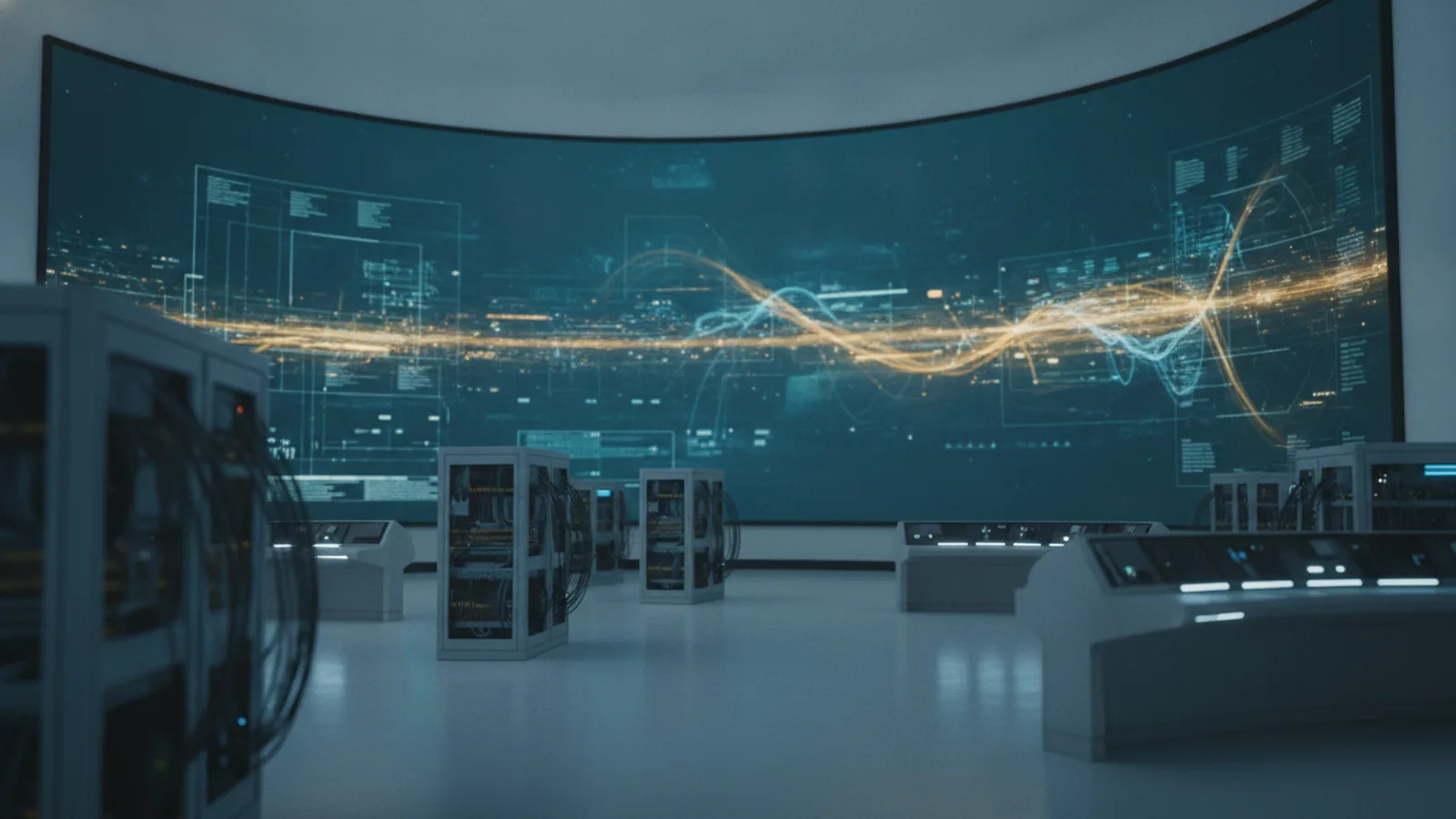
Digital twins 101: what they are and why teams build them
Start here. A digital twin is a computer model of a real asset or process.
It updates as new data arrives. That makes it a living view of today’s state, not a static diagram.
Teams build twins to learn faster and act with more confidence. You can test changes without risking real operations.
Purpose depends on the industry. A twin can map a factory line, a hospital workflow, or a city district.
- Asset twins: motors, pumps, HVAC units, and production gear
- Process twins: work steps, care flow, and maintenance cycles
- Environment twins: grids, neighborhoods, and traffic zones
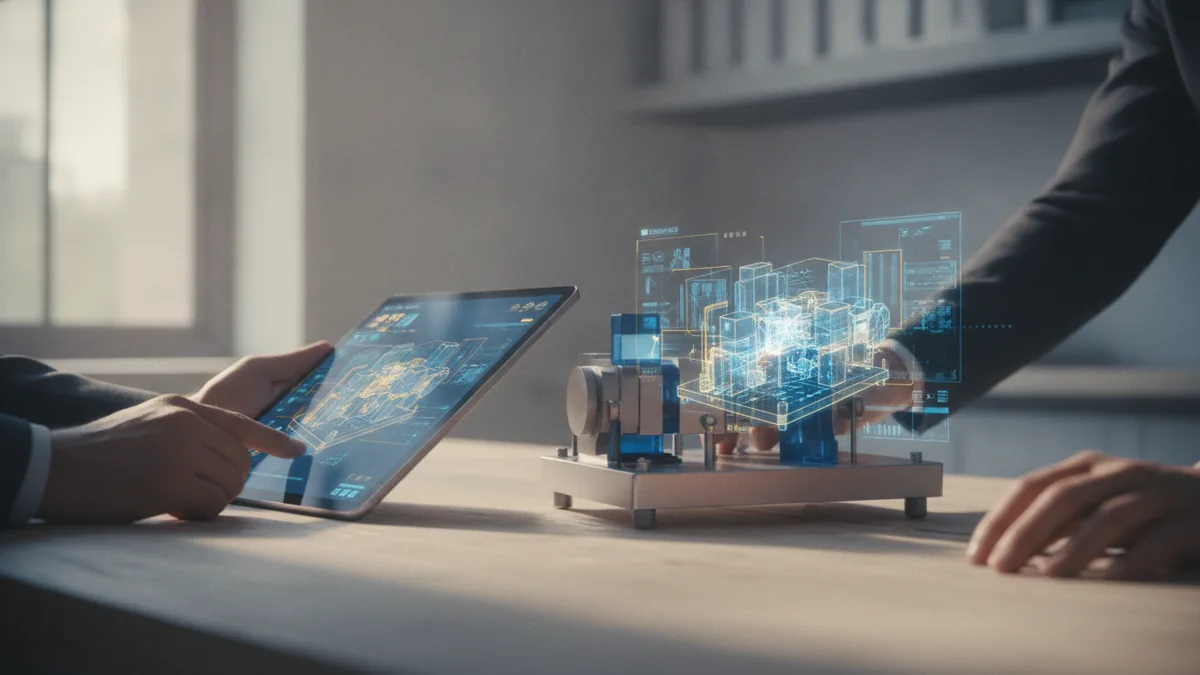
How AI makes digital twins smarter, not just more detailed
AI helps a twin go beyond reporting. It learns patterns from data and makes better guesses.
This is the core idea behind how to build ai enabled digital twins. You add AI for prediction and for smart checks.
Predictive analytics is one key use. It spots early signs of trouble and forecasts likely events ahead.
Another use is anomaly detection. It flags odd signals that do not match past norms.
AI also helps with data fusion. It combines many data feeds into one clean state for the twin.
Finally, scenario simulation is where twins shine. You test “what if” changes in a safe model before you deploy in the real world.
| AI feature | What it adds | What teams gain |
|---|---|---|
| Predictive analytics | Forecasts future trouble | Fewer stop events |
| Anomaly detection | Finds odd sensor or flow gaps | Faster fixing, fewer false alarms |
| Scenario simulation | Compares options safely | Better plans, less risk |
| Data learning | Improves models from history | Better results with less manual work |
Benefits you can measure: prediction, speed, and safer simulation
The best AI-enabled digital twins produce clear numbers. Pick one goal first, like less downtime or faster response.
Predictive maintenance is a common win. It uses model signals to schedule service before a failure hits.
Teams often see fewer urgent repairs. They also plan parts buys with better timing.
Real-time monitoring is another big gain. The twin updates often, so teams spot drift while it is still small.
That helps with faster root cause work. Operators can narrow the search to the most likely signals.
Scenario simulation also gives a measurable edge. You can compare two plans and estimate cost or risk before acting.
- Predictive maintenance: earlier alerts, fewer surprises
- Real-time monitoring: quicker detection of change
- Scenario simulation: safer tests of new choices
- Data visualizations: clearer views for teams
Common challenges: data, compute, and technical complexity
Most teams struggle with data. A twin needs data from sensors, logs, and work systems.
Data integration can fail when time stamps do not match. Units may also differ, like bar vs psi.
Entity mapping is another pain point. A valve tag must match one model part, every time.
Compute demands can also bite. Real-time updates need quick processing and steady storage.
Training and simulation can be heavy too. Those jobs may need separate compute to stay stable.
Technical complexity is real in AI digital twin development. You juggle model build, data work, and safe release checks.
In cyber-physical systems, risks grow when you add control. Wrong outputs must not push unsafe actions.
- Integrate data: align time, fix units, and map parts.
- Plan compute: split real-time jobs from heavy training.
- Test end to end: verify data to decision paths.
- Guard risky moves: use limits and human review at first.
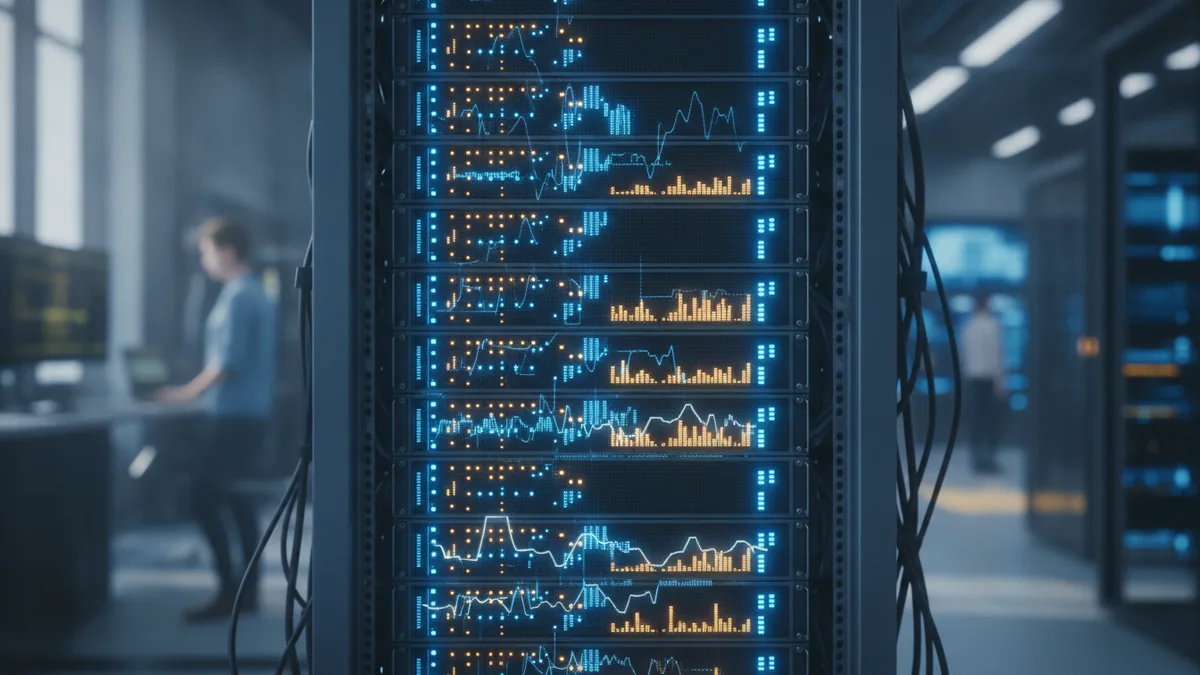
Implementation approaches for creating AI digital twins
To create AI digital twins, start small and specific. Pick one system boundary and one business outcome.
A big-bang twin usually fails. Data gaps appear, and goals often shift mid build.
Three styles work in the real world. A physics-first twin starts with known rules.
A data-first twin learns from past logs and signals. It then uses model tests to check “what if” cases.
A hybrid twin blends both. It can start faster and still keep some rule-based sanity.
Next, build the integration pipeline. You need ingestion, cleaning, and state updates.
For real-time monitoring, use a stream approach. Keep freshness targets so the twin stays reliable.
For batch work, version your data and retrain on a schedule.
Then add AI. Start with labeled data for predictive analytics when you have failure tags.
If labels are rare, use anomaly detection first. Learn what “normal” looks like over time.
Finally, ship it into daily work. Add data visualizations and clear action steps for teams.
| Phase | Main aim | Key deliverable |
|---|---|---|
| Discovery | Set scope and success goals | Use-case plan and data list |
| Modeling | Define the twin state | Twin schema and update rules |
| Data integration | Feed clean signals | Time alignments and part maps |
| AI training | Learn prediction or normal patterns | Tests and validated models |
| Deployment | Connect to work flow | Alerts and model outputs |
| Run and improve | Stay accurate over time | Drift checks and retrain plan |
Case studies and applications: manufacturing, healthcare, and smart cities
Manufacturing is a strong start. Sensors are common on machines and lines.
A smart manufacturing twin can model health state for one key asset. Then it links that state to a maintenance plan.
Teams often begin with one compressor, one spindle, or one bottleneck. They expand after the data pipeline proves stable.
Healthcare twins often model processes more than hardware. A care flow twin can track patient steps and clinic limits.
AI supports demand prediction and risk checks. That helps with scheduling for busy hours and peak days.
Smart cities use twins for many systems at once. A traffic and utilities twin can run scenario simulation for policy changes.
AI helps predict congestion and incident impacts. It uses history plus near-real-time feeds to guide plans.
Across industries, integration discipline matters most. When tags, time stamps, and meanings match, the twin stays coherent.
Teams also start with assistive outputs. They move toward autonomous decision-making only after tests build trust.
Future trends: better AI, deeper simulation, and more autonomy
Future AI digital twins will improve in two ways. AI models get better, and simulation runs get faster.
Better AI will handle uncertainty more clearly. That means predictions come with confidence levels teams can use.
Hybrid methods will grow. Machine learning will team up with rule-based limits for stability.
Simulation will also improve. Faster digital models will let teams test more cases per decision cycle.
Simulation technologies will support tighter loops between planning and action. That helps teams learn from outcomes quickly.
Autonomous decision-making will expand step by step. First, twins will recommend actions with guardrails and audit logs.
Next, teams will widen the set of safe actions. Monitoring, rollback, and checks will still be required.
Bottom line: a reliable path to AI-enabled digital twins
To build ai enabled digital twins, begin with one clear goal. Then define a bounded system so your data work stays manageable.
Invest early in data integration so the twin state is trustworthy. Bad inputs create bad models and wrong decisions.
After that, add AI for predictive analytics, anomaly checks, and scenario simulation. Keep outputs clear and tied to actions.
Track real ops wins like downtime and response time. Separate stream compute from heavy training so costs stay sane.
With careful rollout, you can scale from one asset to wider digital threads. That is how twins become daily tools for industrial applications.
Frequently asked questions
- What is a digital twin and what is it used for in business?
- A digital twin is a computer model of a real system. It updates as data changes. Teams use it to test changes and support daily operations.
- How does AI enhance a digital twin?
- AI helps a twin learn patterns from data. It enables predictive analytics and anomaly detection. It can also run scenario simulation for safer planning.
- What are the biggest challenges when building AI digital twins?
- Teams often struggle with data integration and time alignment. Compute demands can also slow down real-time work. The full pipeline is complex, so testing must be end to end.
- What industries use digital twins with AI in practice?
- Manufacturing uses twins for equipment health and line performance. Healthcare uses twins for care flow and clinic planning. Smart cities use twins for traffic and utilities decisions.
- How should a team approach creating AI digital twins step by step?
- First, define the goal and system boundary. Next, build the twin state model and the data pipeline. Then add AI for prediction or anomalies, and deploy with monitoring and drift checks.
- What future trends should teams expect in AI-enabled digital twins?
- Expect better hybrid AI and faster simulation runs. Predictions will also include clearer uncertainty signals. More systems will offer constrained autonomy with safety guards.
Related reading
How to Write Effective AI Prompts
Learn how to write effective AI prompts with clear tasks, useful context, audience-aware style, the CATS framework, and a simple way to check results.
What Company Owns OpenAI? Ownership Explained
Learn who owns OpenAI, how Microsoft and the OpenAI Foundation fit in, and why share ownership differs from control of the company.
How AI Learns: Data, Training, and Feedback
Learn how AI trains on data, finds patterns, and improves through feedback. Explore supervised, unsupervised, and reinforcement learning with examples.